
A bathroom today is no longer just a place to bathe — it’s part of a home’s architecture and a reflection of how its owners live. That shift means the surfaces inside it have to do more than hold up under water; they have to look intentional. This is where natural stone earns its reputation as the material of choice for bathroom walls, floors, countertops, and washbasins
What Makes Natural Stone the First Choice for Bathrooms
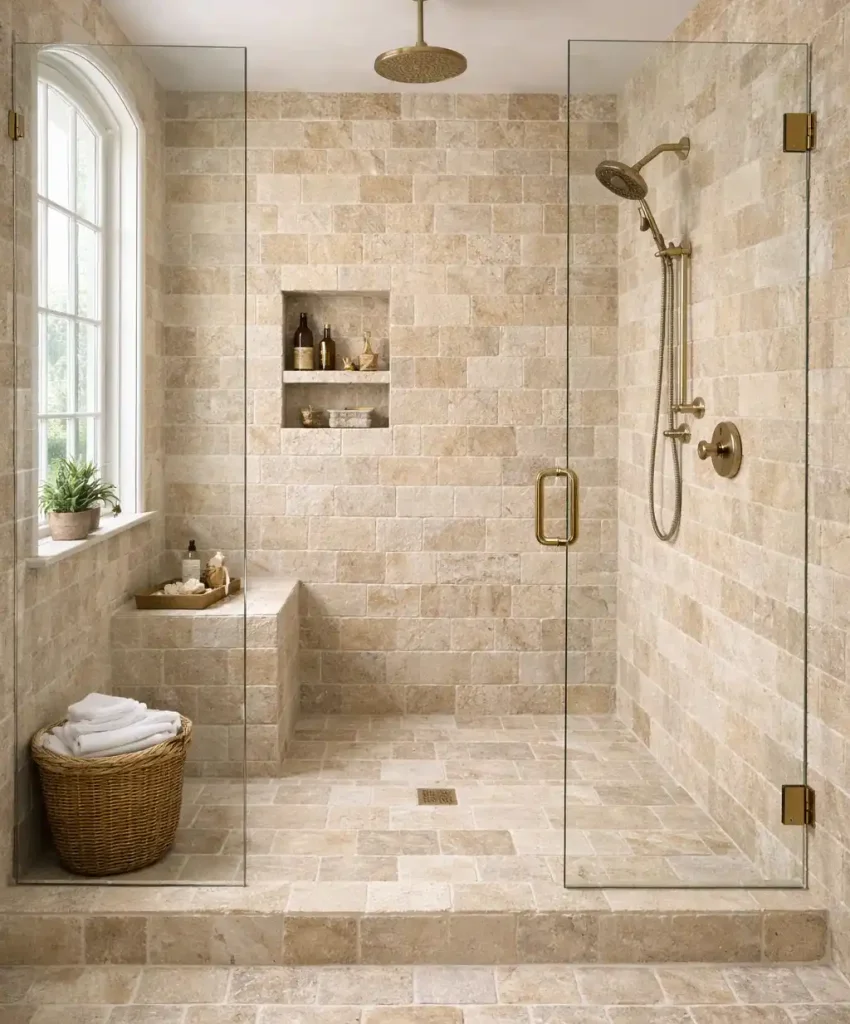
Bathrooms are primarily wet locations; secure footing matters as much as the looks & aesthetics. Natural stone delivers on both, which is why it consistently outperforms manufactured alternatives:
● Long-term maintenance is straightforward. Sealed correctly, natural stone resists staining and wear for years with routine cleaning.
● It makes a bold design statement. Stone reads as elegant and considered, not generic.
● It’s built to last. Marble, granite, slate, and quartzite are dense, durable materials suited to decades of daily use.
● Every slab is unique. Veining and coloring vary naturally, so no two stone bathrooms look identical.
● It adds resale value. A marble or granite bathroom is a feature buyers notice and pay for.
● It’s engineered for wet environments. Properly finished stone is a natural fit for showers, floors, and countertops exposed to constant moisture.
Stone Walls: The Fastest Way to Enhance Bathroom Décor
A stone wall is one of the simplest ways to transform an existing or new bathroom. The right material makes the difference between a wall that just holds tile & one that anchors the whole room’s design.
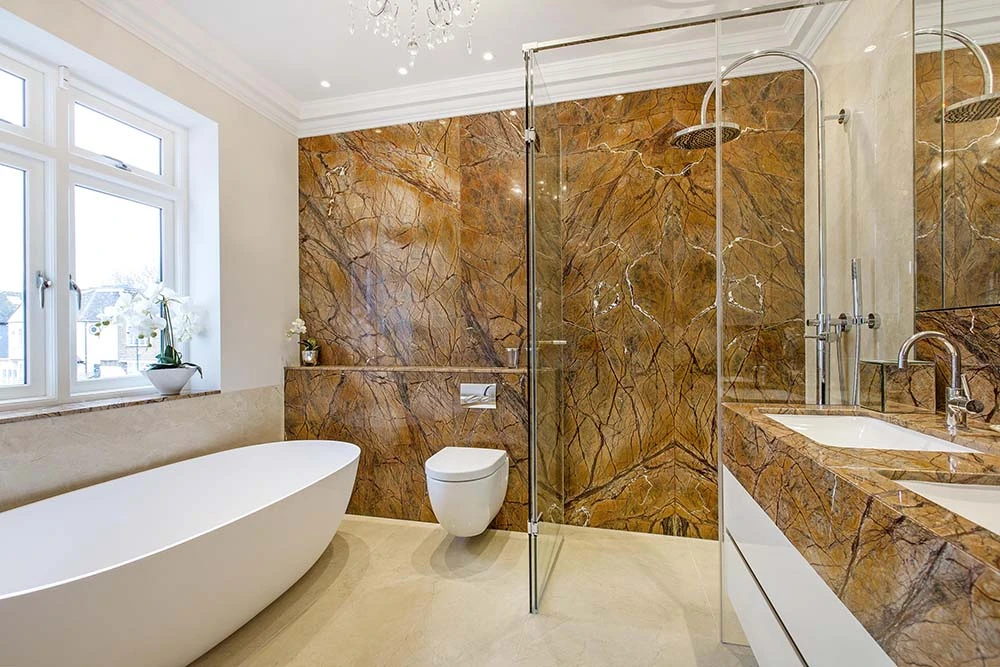
Light white marble works especially well in shower areas — it brightens compact bathrooms and holds up to constant water exposure when properly sealed. Granite performs just as reliably in shower environments and suits a bolder, more contemporary look. Whichever you choose, aim for a continuous design across the wall rather than a patchwork of cuts — it reads as intentional and gives the space a more polished, cohesive finish.
Choosing Non-Slip Natural Stone Tiles
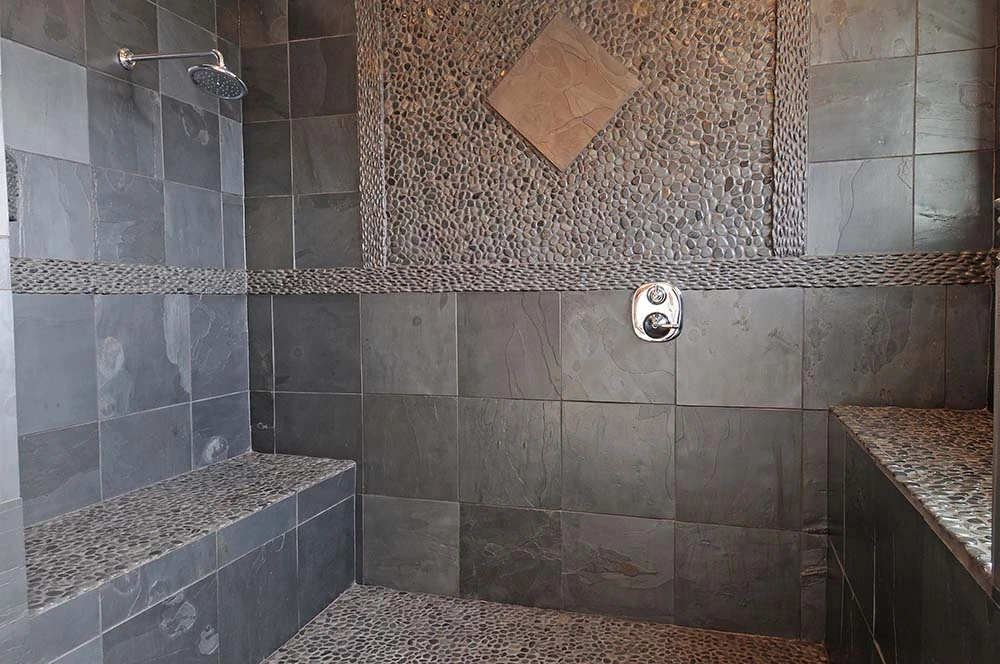
Custom-sized tiles are essential for a safe, non-slip bathroom floor, and slate is particularly well suited to the job — provided it carries a natural, textured finish rather than a polished one. Tumbled, bush-hammered, or chiseled finishes create the texture underfoot that a wet bathroom floor needs, while also adding warmth and character to the surface.
Common tile sizes: 30 x 30 cm, 40 x 40 cm, 60 x 30 cm, and 60 x 60 cm
Common thicknesses: 1 cm, 1.2 cm, and 1.5 cm
For color options, a grey & white combination gives a clean, contemporary base that goes well with most of the fittings, while off-white tiles come up as a warmer, more adventurous option for those who want to choose something less predictable.
Does Anything Beat Natural Stone in a Bathroom?
Manufactured substitutes — porcelain slabs, engineered quartz, laminates — can imitate the look of stone, but none replicate the depth, texture, and one-of-a-kind veining of the real material. If durability, resale value, and genuine visual character matter, natural stone remains the benchmark against which every substitute is measured.
Frequently Asked Questions
Q. Which natural stone is best for a bathroom shower wall?
A. Marble and granite are the two most common choices. Light white marble brightens the space and suits smaller bathrooms, while granite offers a denser, more contemporary alternative — both perform well in continuous moisture when properly sealed.
Q. Is natural stone flooring safe in a wet bathroom?
A. Yes, but make sure the finish is right. A tumbled, bush-hammered, or chiseled texture finish slate provides natural slip resistance, unlike polished stone finishes, which become slippery when wet.
Q. What tile sizes are typically used for stone bathroom floors?
A. Standard sizes include 30 x 30 cm, 40 x 40 cm, 60 x 30 cm, & 60 x 60 cm, in thicknesses of 1 cm, 1.2 cm, or 1.5 cm.
Q. Does natural stone increase a home’s resale value?
A. Yes. Marble and granite installations are widely recognized upgrades that buyers factor into a home’s perceived value, more so than most manufactured alternatives.
Q. What’s the difference between marble, granite, slate, and quartzite for bathrooms?
A. Marble offers a soft, luminous look best suited to walls & light-filled spaces; granite is denser and more resistant to wear, suited to countertops & showers; slate’s natural texture makes it ideal for non-slip flooring; quartzite combines the durability of granite with a marble-like appearance.
Sourcing Natural Stone for Bathroom Design
Whether the project calls for natural stone floor tiles, wall tiles, or a stone washbasin, sourcing from an established supplier makes the difference in consistency, quality control, and price. Regatta Universal Exports is an ISO 9001:2015-certified natural stone manufacturer and supplier based in India, offering a wide range of stone bathroom materials — including white marble — to B2B and B2C buyers globally at competitive pricing.
For a bathroom that goes beyond function and genuinely reflects a homeowner’s style, natural stone remains the material that delivers the wow factor — and Regatta Universal Exports supplies it at scale, without compromising on quality.