
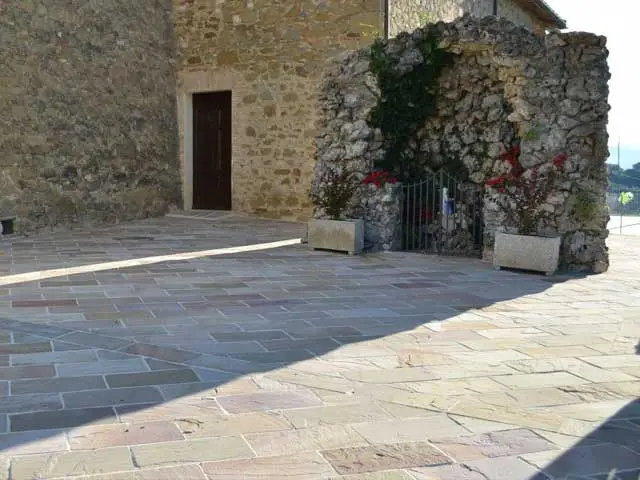
Camel Dust Indian Sandstone is one of those materials that grows on you the more you see it in a space. It doesn’t rely on bold colours or dramatic patterns—instead, it carries a softer mix of beige and light brown tones that feel easy and natural. In outdoor settings especially, this kind of colour works well because it doesn’t clash with plants, wood, or surrounding structures. It simply blends in and lets the overall design come together without feeling forced.
You’ll often notice it being used in patios, garden paths, or open landscape areas where the goal isn’t to make the flooring the main highlight, but to support the entire look. That’s where Camel Dust sandstone fits in nicely. It creates a calm, balanced base that doesn’t feel too busy, even in larger spaces. Over time, as the surroundings evolve—plants grow, furniture changes—the stone still holds its place without looking out of sync.
From a practical point of view, it’s also a fairly dependable option for outdoor use. It can handle regular exposure to sun and rain without demanding too much maintenance, which matters in real-world projects. Whether it’s a small residential setup or a bigger outdoor layout, this sandstone tends to settle into the space comfortably—and that quiet consistency is often what makes people stick with it.
A Closer Look at Camel Dust Sandstone
Camel Dust sandstone is formed over millions of years through the natural compression of sand particles. This gives it a dense structure along with a fine, even grain. Unlike heavily veined stones, this one keeps things minimal—its beauty lies in its consistency and soft tonal shifts rather than dramatic patterns.
Because of its neutral shades, it works well across different design styles. You’ll see it used just as easily in modern outdoor layouts as in more traditional or rustic spaces.
From a performance standpoint, it holds up well against moisture, temperature variations, and general wear, which is why it’s commonly chosen for exterior applications.
Key Highlights
- Natural beige to light brown colour palette
- Subtle variations for a more organic look
- Suitable for both indoor and outdoor use
- Good resistance to weathering and moisture
- Easy to work with in different finishes and formats
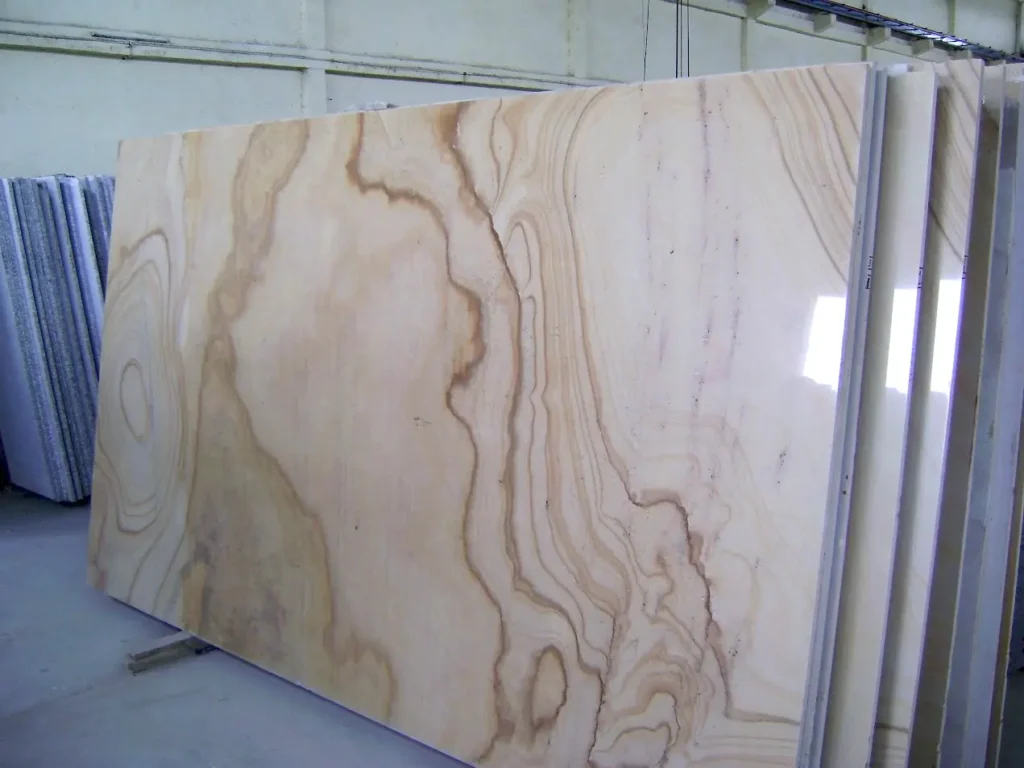
Where It’s Commonly Used
Camel Dust sandstone is quite versatile in terms of application. Some of the most common uses include:
- Garden paving and patios
- Walkways and driveways
- Poolside areas
- Wall cladding and facades
- Steps, kerbs, and landscaping features
Its understated colour makes it especially useful in large areas where consistency matters.
Camel Dust Sandstone – Available Sizes & Specifications
- Tiles:
30 x 30, 40 x 40, 60 x 30-40-60 CM, Opus Pattern (Big & Small) - Cobbles:
10 x 10 x 7-9 CM & 8-10 CM
14 x 14 x 3-5 CM & 7-9 CM
14 x 20 x 3-5 CM & 7-9 CM
20 x 20 x 7-9 CM
5 x 5 x 4-6 CM
15 x 15 x 11-13 CM - Palisades:
100 x 20-25 x 7-9 CM
25-250 x 12-25 x 9-11 CM & 11-13 CM
- Kerbstones:
50-100 x 20 x 7-9 CM
100 x 25 x 12-13-15 CM
100-200 x 20-50 x 3-5 CM - Steps:
50-250 x 30-40 x 13-20 CM and more - Pool Copings:
60 x 30 x 2 CM and customized sizes - Other Applications:
Floor plates, wall cladding, skirting stones, facing bricks, wall stones, and crazy paving available as per project requirements
Indian Sandstone in the Global Market
India has been supplying sandstone to international markets for quite some time now, and stones like Camel Dust have gradually found their place in different regions, especially across Europe and the Middle East. One of the main reasons is fairly simple—buyers know what they’re getting. The material is consistent, pricing is competitive, and there’s usually enough flexibility in terms of sizes and finishes to match different project needs. It’s not always about finding something unique; in many cases, it’s about finding something reliable that works across projects.
Another thing that works in India’s favour is the ability to handle various types of orders without much friction. Some buyers are looking at large volumes for ongoing developments, while others may need smaller, more specific quantities. In both cases, the supply chain is generally set up to manage it. Customization also plays a role here—whether it’s adjusting thickness, working on a particular finish, or preparing material as per a design brief, there’s usually room to make those changes without overcomplicating the process.
Regatta Universal Exports works with clients across different markets, supplying Camel Dust Indian Sandstone for a mix of residential and commercial requirements. With years of experience in the natural stone export space, the focus is less on over-promising and more on keeping things consistent—quality, timelines, and communication. In most projects, that’s what ends up mattering more than anything else.