
Indian sandstone is one of the world’s most widely specified natural stones for interior and exterior construction, prized for its natural color range, weather resistance, and versatility across applications from garden paving to architectural cladding. It is exported in bulk to the UK, USA, Germany, the Middle East, and beyond, where it is valued as a durable, cost-effective alternative to quarried European stone.
This guide covers what Indian sandstone is, its wide varieties and finishes, where it performs best, how it compares to other natural stones, and what to check before choosing a supplier.
What Is Indian Sandstone?
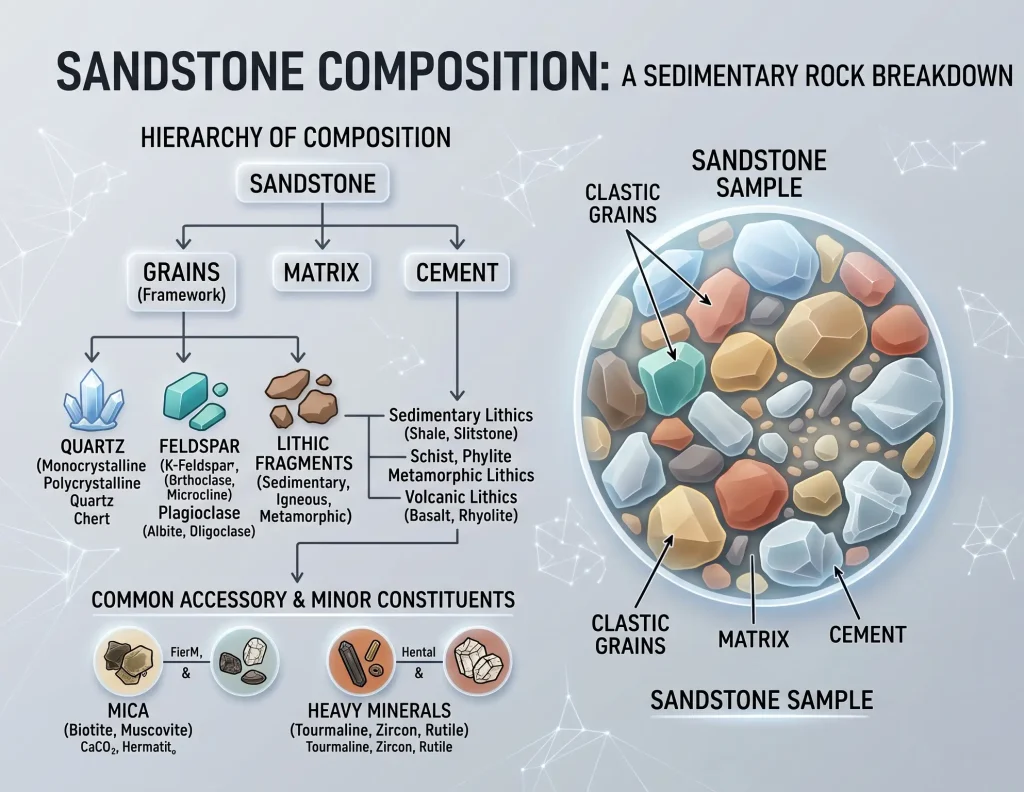
Indian sandstone is a sedimentary natural stone quarried primarily in the Indian states of Rajasthan and Madhya Pradesh. It forms from compacted layers of sand, quartz, and mineral deposits over millions of years, which gives it its distinctive layered grain, natural color variation, and durability. Because it is a stratified stone, it splits naturally along its bedding planes — this is what makes “riven” or hand-cut sandstone paving possible without heavy machining.
India is the largest producer and exporter of sandstone globally, supplying both raw blocks and finished, calibrated products to fabricators, importers, landscapers, and architects across more than 60 countries.
Popular Varieties of Indian Sandstone
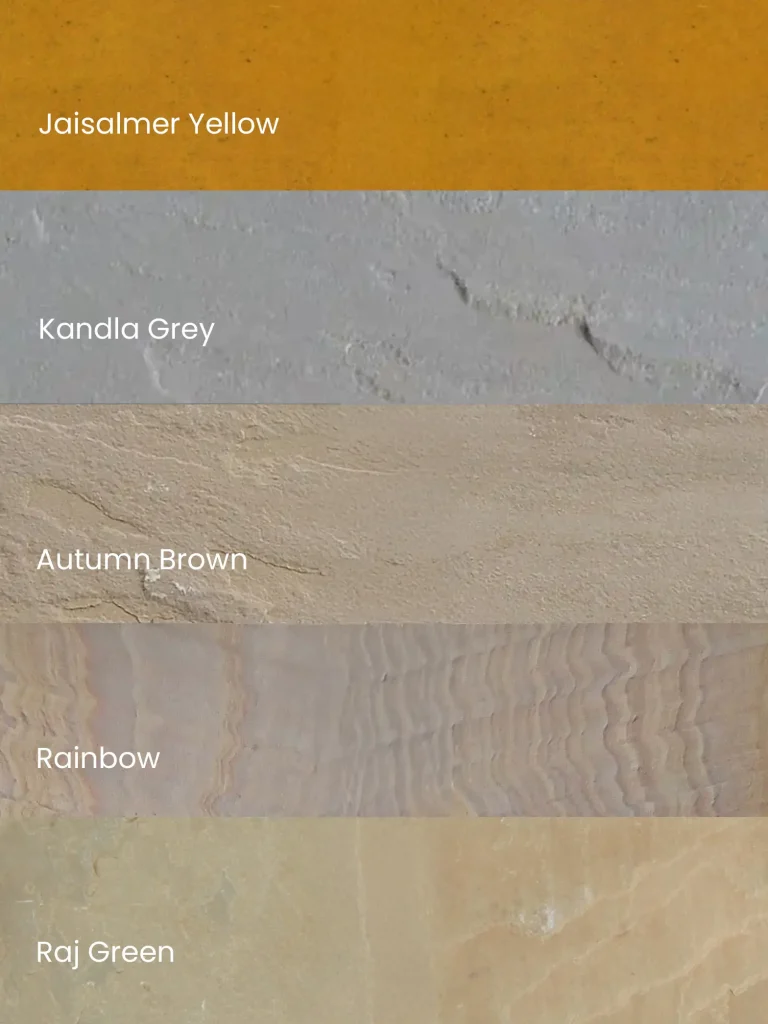
Indian sandstone is available in a wide color palette, and each variety has slightly different mineral composition, hardness, and typical use case.
| Variety | Typical Color | Common Uses |
|---|---|---|
| Bansi Pink | Warm pink with grey veining | Paving, cladding, garden features |
| Jodhpur Pink / Dholpur Pink | Soft pink-beige | Flooring, wall cladding |
| Jaisalmer Yellow | Golden yellow | Paving, flooring, monuments |
| Kandla Grey | Uniform grey | Modern paving, commercial flooring |
| Modak (Autumn Brown) | Rustic brown-multi | Rustic paving, patios |
| Yellow Wood | Yellow with grain texture | Paving, steps, cladding |
| Rainbow | Multicolor (pink, grey, buff) | Decorative paving, feature walls |
| Raj Green | Green-grey | High-end paving and cladding |
Each of these can typically be supplied as slabs, tiles, cobbles, setts, copings, and custom-cut pieces depending on project requirements.
Sandstone Finishes: Choosing the Right Surface
The finish affects both the appearance and the slip resistance of the stone, so it should be chosen based on where the stone will be installed.
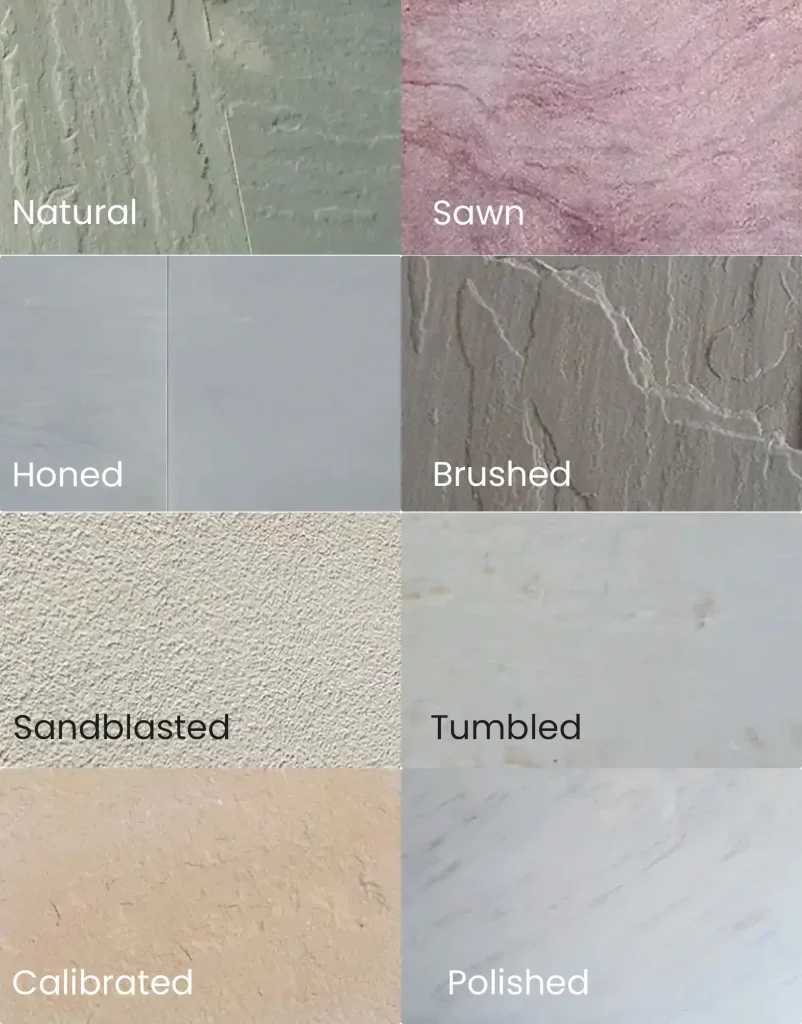
Following are the sandstone finishes:
● Natural: Split by hand along natural bedding planes, giving a textured, rustic surface. Common for garden paving and driveways.
● Sawn: A flat, smooth finish from mechanical cutting, giving clean, uniform lines. Suited to contemporary paving and cladding.
● Honed: Ground to a smooth, matte, low-sheen surface. Popular for interior flooring and modern exteriors.
● Brushed: Wire-brushed to soften edges and add texture while keeping a slightly worn, tumbled-like appearance without full tumbling.
● Sandblasted: Textured using high-pressure sand for a durable, anti-slip surface, ideal for pool surrounds and wet areas.
● Tumbled: Mechanically aged to create rounded edges and an antique appearance, often used for heritage-style paving.
● Calibrated (Bottom Calibrated): Precision-thicknessed on the underside for easy, consistent installation, especially useful for large-format paving projects.
● Polished: A reflective, glossy finish generally reserved for interior applications rather than exterior paving, where slip resistance matters more.
Where Indian Sandstone Is Used
Exterior applications remain the most common use of Indian sandstone, thanks to its weather resistance and natural anti-slip texture:
● Patios, pathways, driveways, and pool surrounds
● Garden paving and stepping stones
● Boundary walling and cladding
● Decorative garden features — fountains, stone lamps, statues, planters, urns, birdbaths, and outdoor furniture
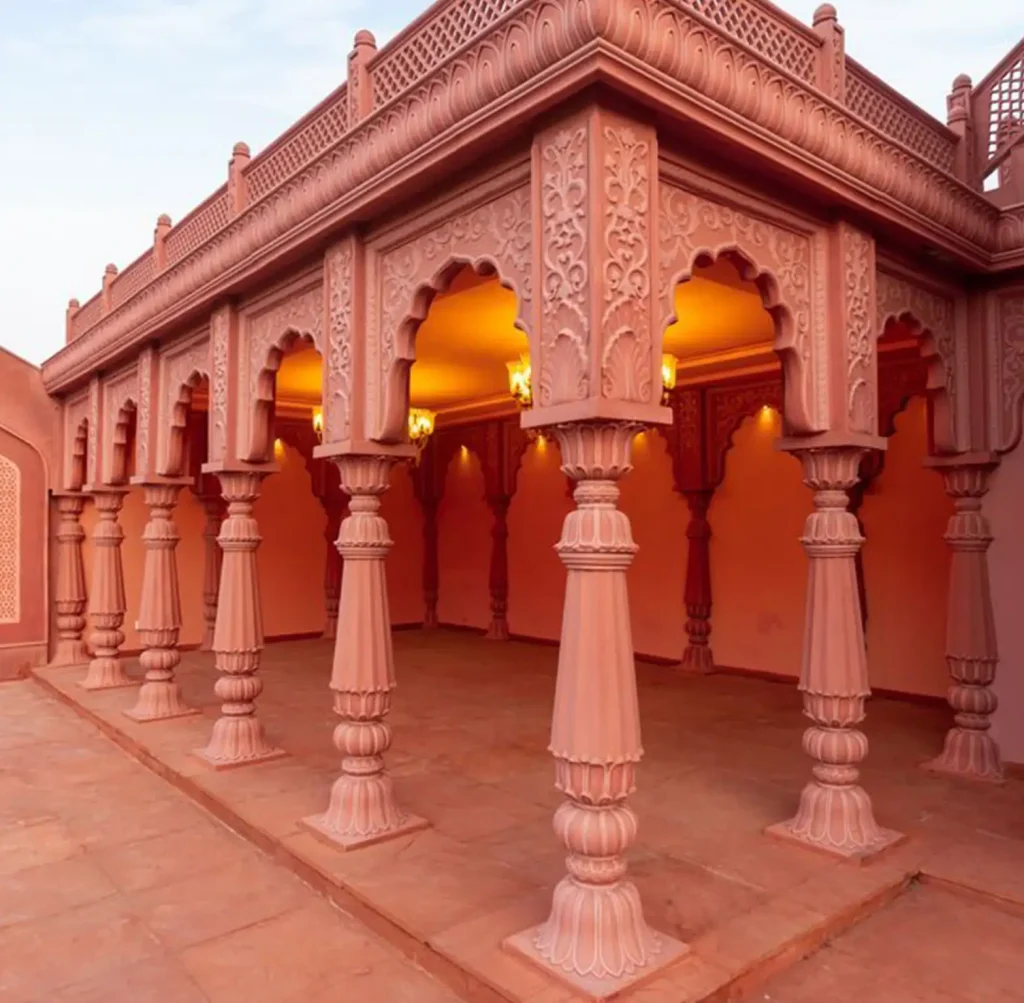
● Architectural elements — pillars, columns, stone balls, stone mushrooms, and millwheels
Interior applications include flooring, wall cladding, and feature pieces in homes, hospitality projects, and commercial interiors, particularly where a honed or polished finish is used.
Historically, sandstone has also been used in monuments, palaces, and public buildings worldwide, and it remains a popular choice for restoration and heritage-style projects due to its natural, aged aesthetic.
Why Indian Sandstone Is in Global Demand
Several technical and practical qualities explain why importers and contractors in the UK, USA, and Germany continue to specify Indian sandstone over alternatives:
1. All-Season Durability: Indian sandstone performs reliably across hot, cold, and wet climates, including UK and Northern European winters, provided the correct grade and finish are selected and sealed appropriately.
2. Frost and Weather Resistance: Properly sourced and processed sandstone is dense enough to resist freeze-thaw cycling, an important consideration for outdoor paving in colder markets.
3. Natural Slip Resistance: Riven, brushed, and sandblasted finishes provide inherent grip, making sandstone a practical choice for walkways, pool surrounds, and driveways.
4. Workability: Sandstone can be cut, carved, and shaped with precision, allowing custom sizes, edge profiles, and decorative elements.
5. Aesthetic Range: Few natural stones offer as wide a color and texture range, allowing sandstone to suit both rustic and contemporary design briefs.
6. Low Maintenance: With basic sealing and cleaning, sandstone retains its appearance for decades without specialized upkeep.
7. Cost-Effectiveness: Compared to many quarried European stones, Indian sandstone offers a lower landed cost at comparable or better performance for most exterior applications.
Indian Sandstone vs. Other Natural Stones
| Factor | Sandstone | Limestone | Granite |
|---|---|---|---|
| Slip resistance (unsealed) |
High (textured finishes) | Moderate | Low–moderate (polished) |
| Best for | Exterior paving, cladding | Interior flooring, cladding | Heavy-traffic flooring, countertops |
| Maintenance | Low, periodic sealing | Moderate, sensitive to acids | Very low |
| Typical cost | Lower–moderate | Moderate | Moderate–high |
| Color/texture range | Very wide | Moderate | Wide but more uniform |
Sandstone is generally the stronger choice for exterior paving and landscaping projects where natural grip and weathering performance matter, while granite is often preferred for high-traffic interior flooring and countertops.
A Buying Guide: What to Check Before You Import Sandstone
For importers, fabricators, and contractors sourcing sandstone in bulk, a few checks make a material difference to project outcomes:
● Match finish to application: Riven or sandblasted for exteriors and wet areas; honed for interiors.
● Confirm calibration tolerance: Especially important for large paving orders where consistent thickness affects installation time and cost.
● Ask about packaging standards: Improper packaging is a leading cause of breakage and damage during long-distance shipping.
● Verify quality certifications: Look for manufacturers with recognized quality and environmental management certifications rather than relying on price alone.
● Request sample approval before bulk orders: Natural stone has inherent variation; approving a physical sample avoids mismatches at scale.
● Clarify lead times and Incoterms: For UK, USA, and Germany-bound shipments, confirm FOB/CIF terms and realistic delivery windows upfront.
Why Choose Regatta Universal Exports
Regatta Universal Exports is the export division of the Regatta Group, which brings more than 25 years of natural stone manufacturing experience to every order. Rather than depending solely on third-party quarry supply, Regatta sources sandstone from reputed quarries and then processes, finishes, and manufactures the stone in-house at its own facilities — giving tighter control over quality, consistency, and lead times than typical trading intermediaries.
Regatta’s credentials include:
● ISO 9001:2015 (Quality Management)
● ISO 14001:2015 (Environmental Management)
● CE Certification
● Xertifix Plus (responsible mining and labor standards)
● D&B Registration
● CAPEXIL Membership
● One Star Export House status from the Government of India
Combined with a track record of on-time deliveries, secure export-grade packaging, and competitive pricing, this makes Regatta Universal Exports a dependable long-term sourcing partner for importers, fabricators, architects, contractors, and wholesalers across the UK, USA, Germany, and other global markets.
You can browse the full range of sandstone varieties, colors, and finishes on Regatta’s sandstone product page and submit a Product Enquiry directly from the listing you’re interested in. The Regatta team responds to enquiries promptly with pricing, specifications, and sample availability.
Frequently Asked Questions
1. Is Indian sandstone suitable for cold, wet climates like the UK or Germany?
Yes. Properly processed and sealed Indian sandstone is frost-resistant and performs well in freeze-thaw conditions, which is why it remains a leading paving material in the UK and Northern Europe.
2. What is the difference between calibrated and natural sandstone paving?
Calibrated sandstone is precision-finished on the underside to a consistent thickness for faster, more even installation, while natural (uncalibrated) sandstone has slight thickness variation and typically requires a mortar bed to level.
3. Which sandstone finish is best for a driveway or pool surround?
Riven, brushed, or sandblasted finishes are best for driveways and pool surrounds because they offer natural slip resistance, unlike polished finishes.
4. How is Indian sandstone priced for export?
Pricing depends on the variety, finish, thickness, calibration, and order volume, along with shipping terms (FOB/CIF) and destination. Requesting a quote with exact specifications gives the most accurate pricing.
5. Does Indian sandstone need sealing?
Sealing is recommended, particularly for lighter-colored varieties and high-traffic or high-moisture areas, to reduce staining and extend the stone’s lifespan, though sandstone is inherently low-maintenance even unsealed.
6. What is the minimum order quantity for bulk sandstone export?
This varies by supplier and product; contact Regatta Universal Exports directly through the product enquiry form for MOQ, container-load options, and mixed-pallet availability.